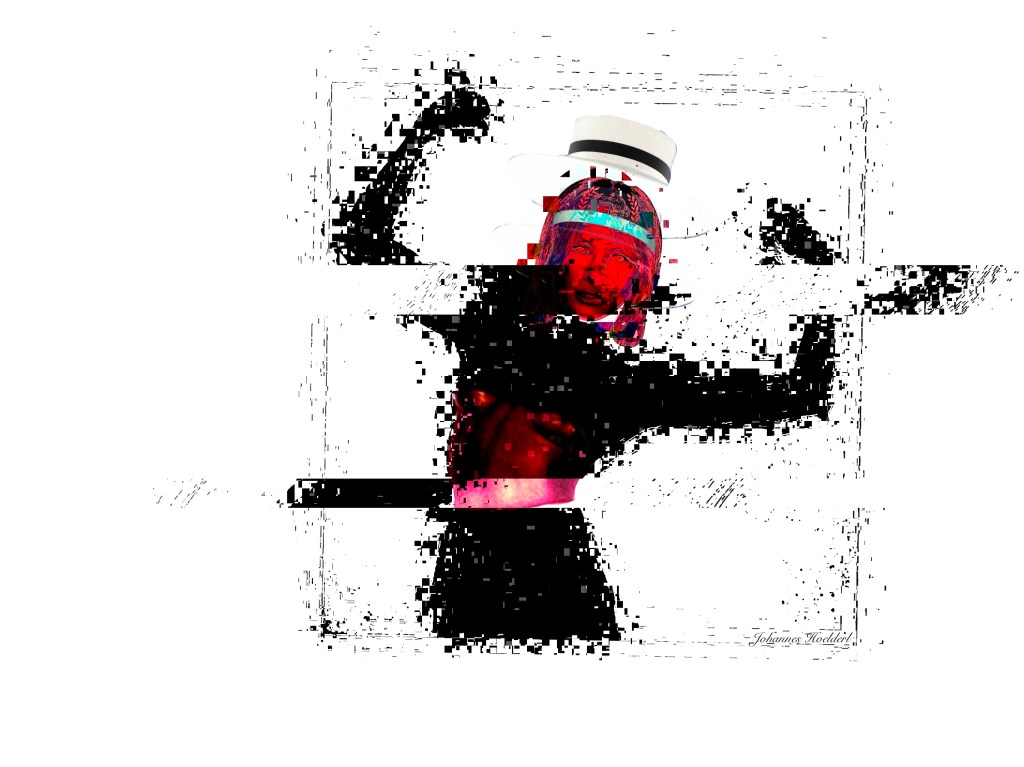
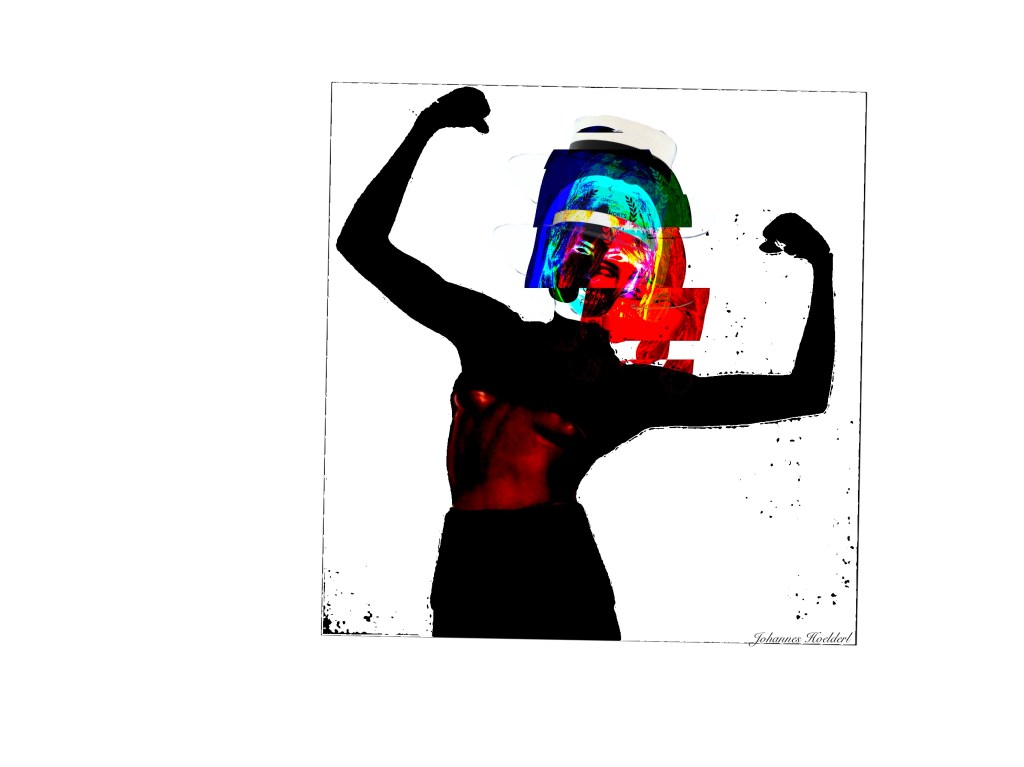
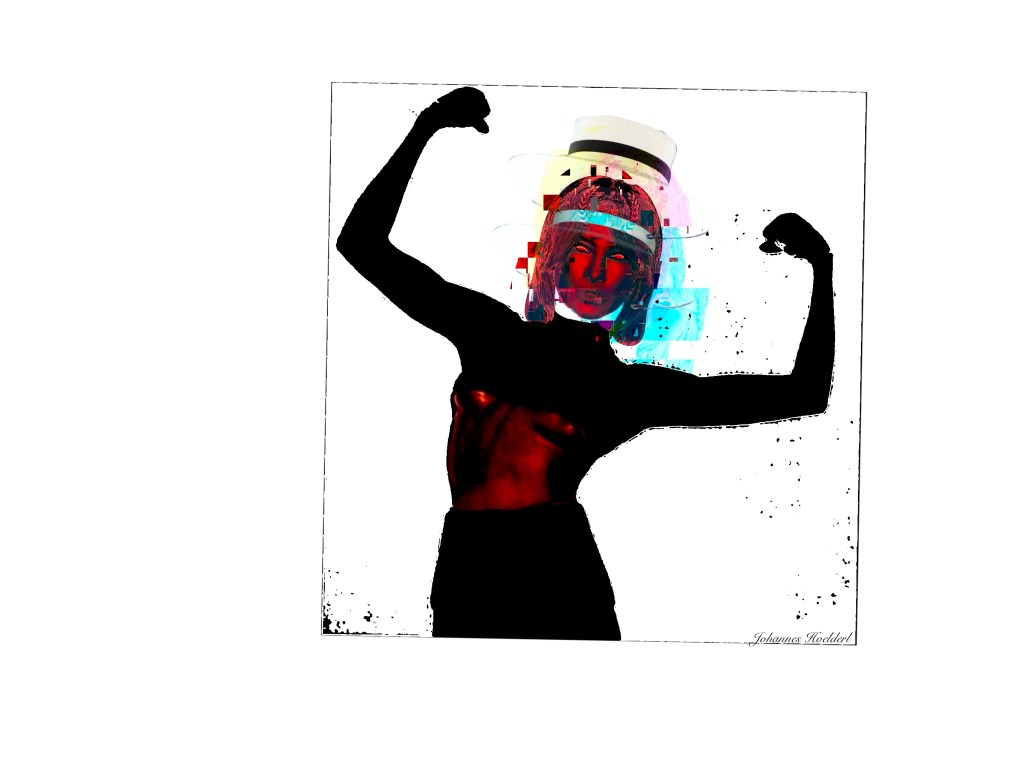
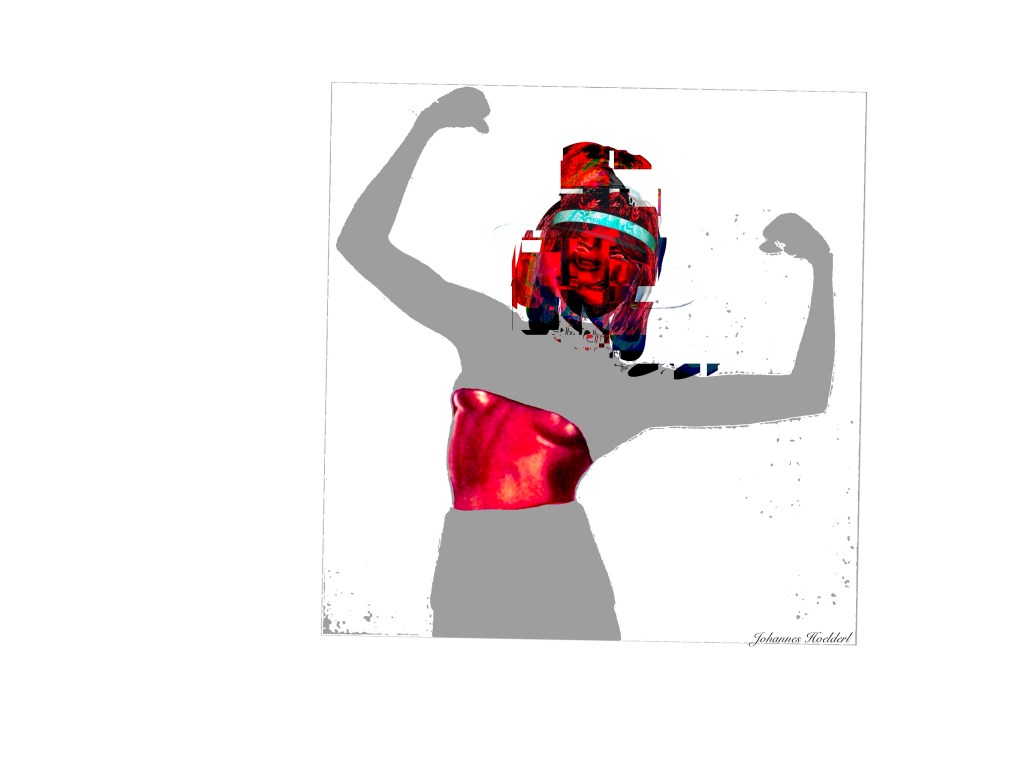
• This digital artwork is a compelling piece of **glitch art** that explores themes of identity and technological fragmentation. It uses heavy digital distortion to "deconstruct" a portrait, creating a sense of a human signal being lost in noise. ### Composition and Subject * **Central Figure:** The piece features a central human figure, seemingly mid-motion with arms raised in a dynamic, defensive, or expressive pose. * **Headwear:** The most distinct and "solid" element is a white **boater hat** with a black ribbon, which provides a grounded, classic fashion element amidst the digital chaos. * **Framing:** The figure is loosely framed within a faint, sketchy square border that appears to be disintegrating along with the subject. ### Color and Contrast * **High Contrast:** The work relies on a stark **monochromatic background** (pure white) which makes the dark, fragmented silhouette of the figure pop intensely. * **Primary Palette:** The dominant colors are deep blacks and saturated **crimson and magenta reds**. * **Accent Colors:** Small, sharp bursts of **cyan and teal** appear in the glitch artifacts around the head, contrasting with the warm tones of the face. ### Technical Glitch Effects * **Pixelation and Scattering:** The edges of the figure are not solid; they are shattered into thousands of tiny black pixels that seem to be drifting away into the white void. * **Horizontal Data Corruption:** Several thick horizontal bars—reminiscent of **analog scan lines** or corrupted video data—cut across the figure's face and torso, "masking" parts of the subject. * **Thermal/Inverted Face:** The face is rendered in a high-intensity red and pink palette, with the eyes appearing as glowing white voids, giving the subject an ethereal or "monitored" appearance. --- The overall mood is one of **digital decay**. It feels like a captured moment from a failing transmission, where the human form is being converted into—and potentially erased by—pure data.
  • This digital artwork is a compelling piece of **glitch art** that explores themes of identity and technological fragmentation. It uses heavy digital distortion to "deconstruct" a portrait, creating a sense of a human signal being lost in noise. ### Composition and Subject * **Central Figure:** The piece features a central human figure, seemingly mid-motion with arms raised in a dynamic, defensive, or expressive pose. * **Headwear:** The most distinct and "solid" element is a white **boater hat** with a black ribbon, which provides a grounded, classic fashion element amidst the digital chaos. * **Framing:** The figure is loosely framed within a faint, sketchy square border that appears to be disintegrating along with the subject. ### Color and Contrast * **High Contrast:** The work relies on a stark **monochromatic background** (pure white) which makes the dark, fragmented silhouette of the figure pop intensely. * **Primary Palette:** The dominant colors are deep blacks and saturated **crimson and magenta reds**. * **Accent Colors:** Small, sharp bursts of **cyan and teal** appear in the glitch artifacts around the head, contrasting with the warm tones of the face. ### Technical Glitch Effects * **Pixelation and Scattering:** The edges of the figure are not solid; they are shattered into thousands of tiny black pixels that seem to be drifting away into the white void. * **Horizontal Data Corruption:** Several thick horizontal bars—reminiscent of **analog scan lines** or corrupted video data—cut across the figure's face and torso, "masking" parts of the subject. * **Thermal/Inverted Face:** The face is rendered in a high-intensity red and pink palette, with the eyes appearing as glowing white voids, giving the subject an ethereal or "monitored" appearance. --- The overall mood is one of **digital decay**. It feels like a captured moment from a failing transmission, where the human form is being converted into—and potentially erased by—pure data.
  • This digital artwork is a compelling piece of **glitch art** that explores themes of identity and technological fragmentation. It uses heavy digital distortion to "deconstruct" a portrait, creating a sense of a human signal being lost in noise. ### Composition and Subject * **Central Figure:** The piece features a central human figure, seemingly mid-motion with arms raised in a dynamic, defensive, or expressive pose. * **Headwear:** The most distinct and "solid" element is a white **boater hat** with a black ribbon, which provides a grounded, classic fashion element amidst the digital chaos. * **Framing:** The figure is loosely framed within a faint, sketchy square border that appears to be disintegrating along with the subject. ### Color and Contrast * **High Contrast:** The work relies on a stark **monochromatic background** (pure white) which makes the dark, fragmented silhouette of the figure pop intensely. * **Primary Palette:** The dominant colors are deep blacks and saturated **crimson and magenta reds**. * **Accent Colors:** Small, sharp bursts of **cyan and teal** appear in the glitch artifacts around the head, contrasting with the warm tones of the face. ### Technical Glitch Effects * **Pixelation and Scattering:** The edges of the figure are not solid; they are shattered into thousands of tiny black pixels that seem to be drifting away into the white void. * **Horizontal Data Corruption:** Several thick horizontal bars—reminiscent of **analog scan lines** or corrupted video data—cut across the figure's face and torso, "masking" parts of the subject. * **Thermal/Inverted Face:** The face is rendered in a high-intensity red and pink palette, with the eyes appearing as glowing white voids, giving the subject an ethereal or "monitored" appearance. --- The overall mood is one of **digital decay**. It feels like a captured moment from a failing transmission, where the human form is being converted into—and potentially erased by—pure data.
  • This digital artwork is a compelling piece of **glitch art** that explores themes of identity and technological fragmentation. It uses heavy digital distortion to "deconstruct" a portrait, creating a sense of a human signal being lost in noise. ### Composition and Subject * **Central Figure:** The piece features a central human figure, seemingly mid-motion with arms raised in a dynamic, defensive, or expressive pose. * **Headwear:** The most distinct and "solid" element is a white **boater hat** with a black ribbon, which provides a grounded, classic fashion element amidst the digital chaos. * **Framing:** The figure is loosely framed within a faint, sketchy square border that appears to be disintegrating along with the subject. ### Color and Contrast * **High Contrast:** The work relies on a stark **monochromatic background** (pure white) which makes the dark, fragmented silhouette of the figure pop intensely. * **Primary Palette:** The dominant colors are deep blacks and saturated **crimson and magenta reds**. * **Accent Colors:** Small, sharp bursts of **cyan and teal** appear in the glitch artifacts around the head, contrasting with the warm tones of the face. ### Technical Glitch Effects * **Pixelation and Scattering:** The edges of the figure are not solid; they are shattered into thousands of tiny black pixels that seem to be drifting away into the white void. * **Horizontal Data Corruption:** Several thick horizontal bars—reminiscent of **analog scan lines** or corrupted video data—cut across the figure's face and torso, "masking" parts of the subject. * **Thermal/Inverted Face:** The face is rendered in a high-intensity red and pink palette, with the eyes appearing as glowing white voids, giving the subject an ethereal or "monitored" appearance. --- The overall mood is one of **digital decay**. It feels like a captured moment from a failing transmission, where the human form is being converted into—and potentially erased by—pure data.

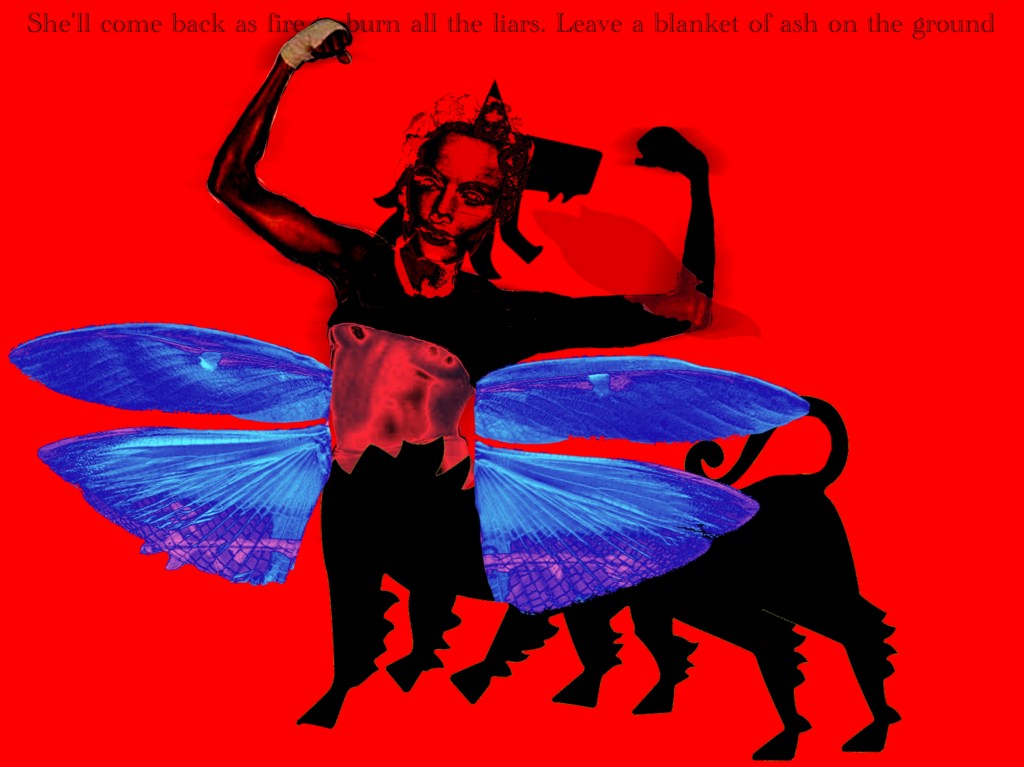
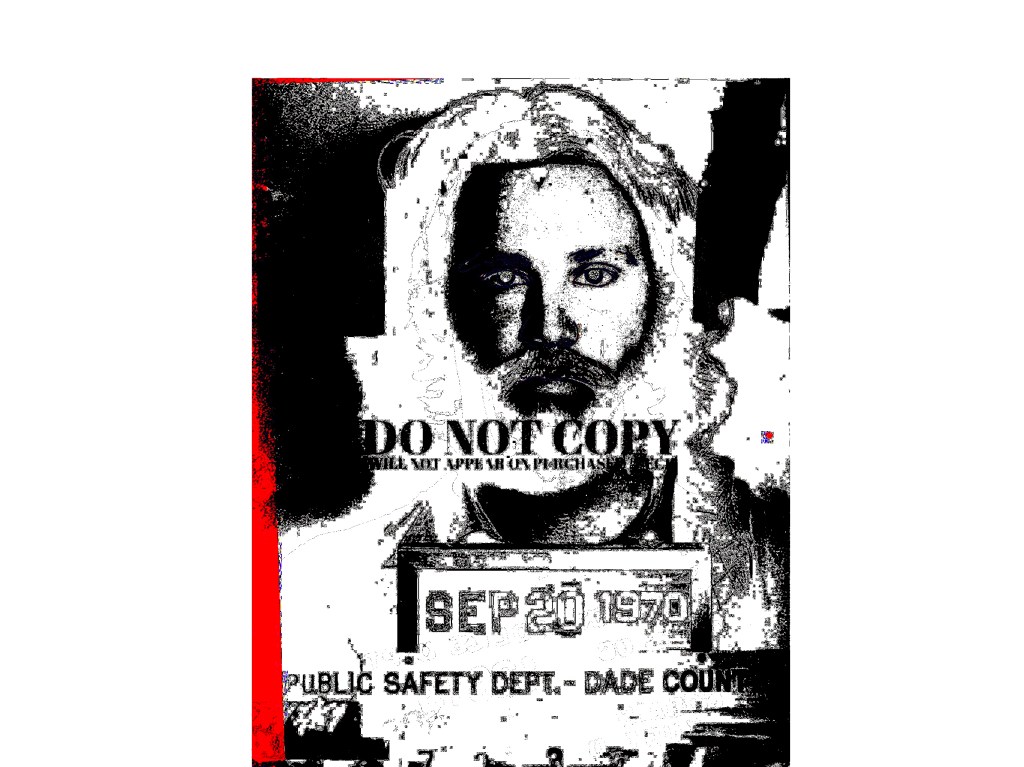
Come back as Fire 4 is a collision between classical elegance and chaos. It uses heavy distortion to “deconstruct” a portrait, creating a sense of a human signal being lost in noise.
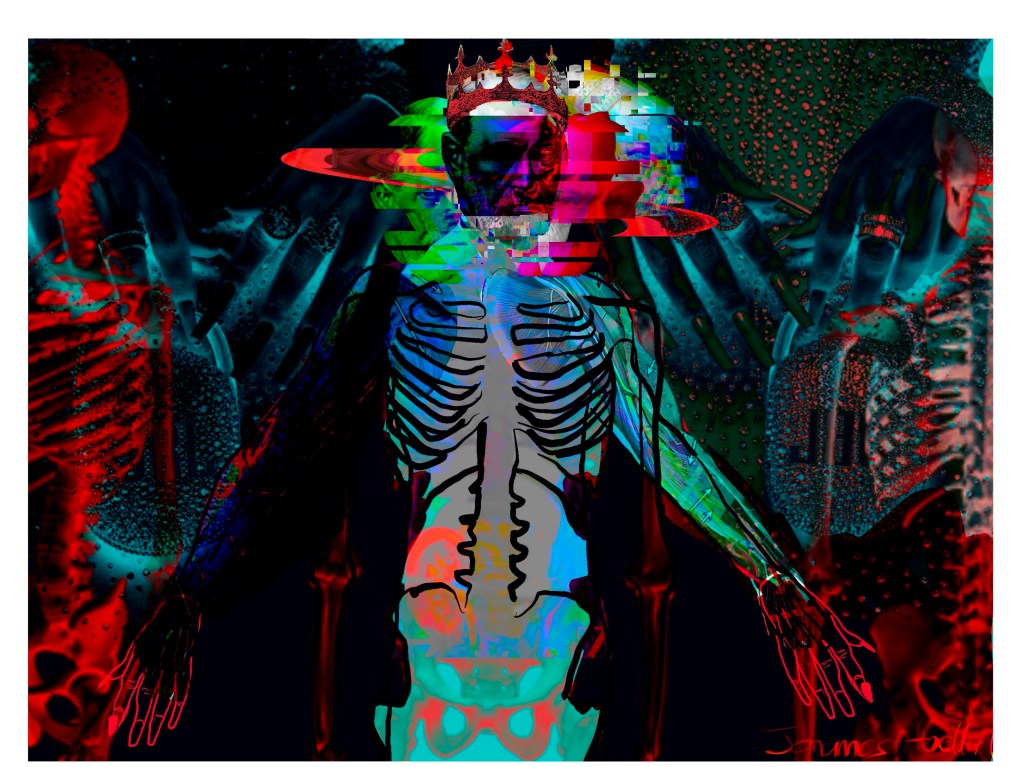
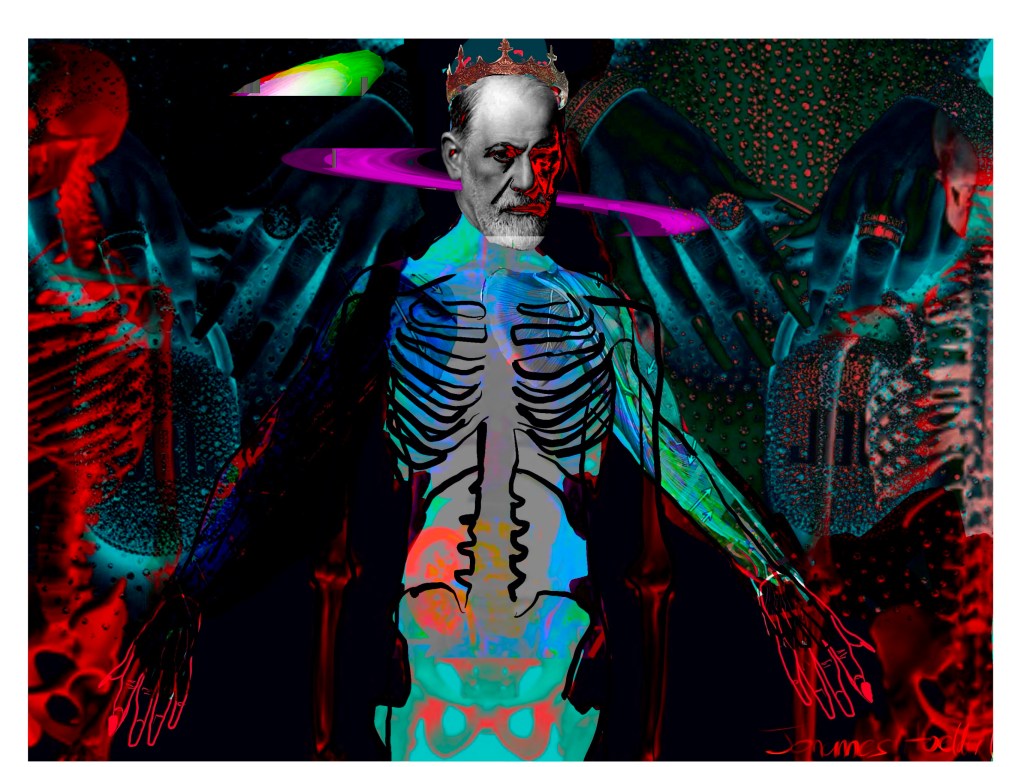
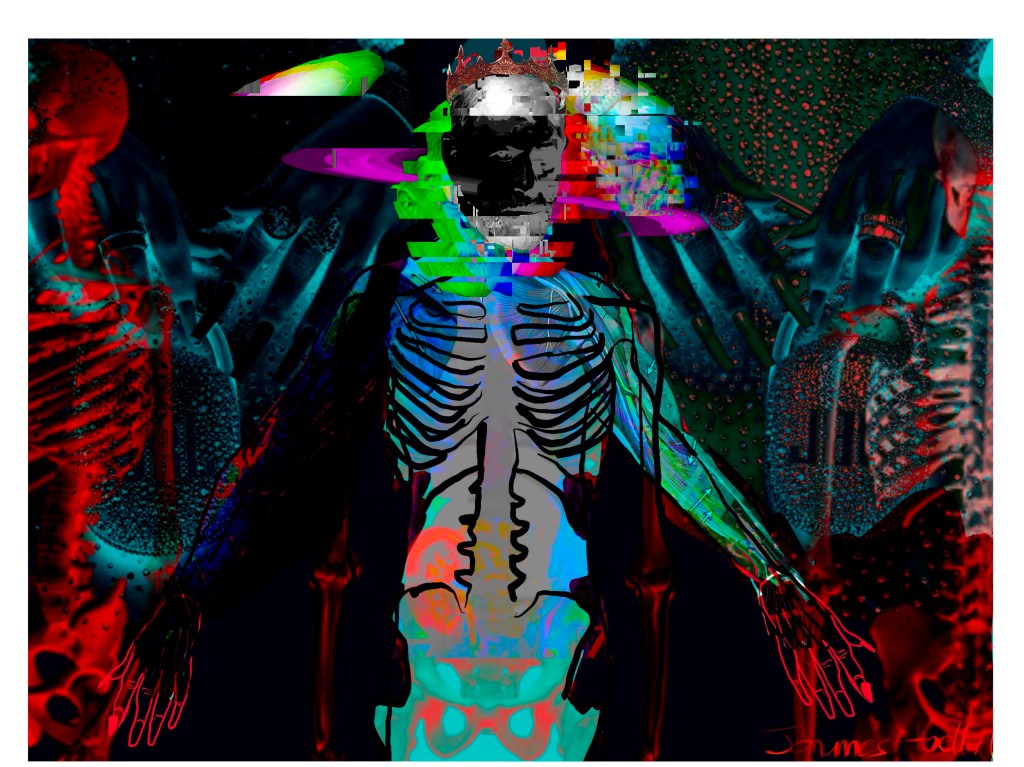
Freud, presents a dark and surreal vision that blends royalty, anatomy, and cosmic symbolism.

The body is both human and skeletal, blending life and death into a single form. The lower torso glows with surreal, almost radioactive hues—turquoise, red, and orange—adding to the sense of inner energy or transformation.

Behind him spread large, dark wings, giving him an angelic or fallen-angel presence. The wings are heavy and textured, dotted with small circular patterns, and they stretch outward symmetrically, framing the central figure like a gothic altarpiece. explores power, decay, and divinity.
  • This painting presents a dramatic fusion of classical portraiture and digital corruption.
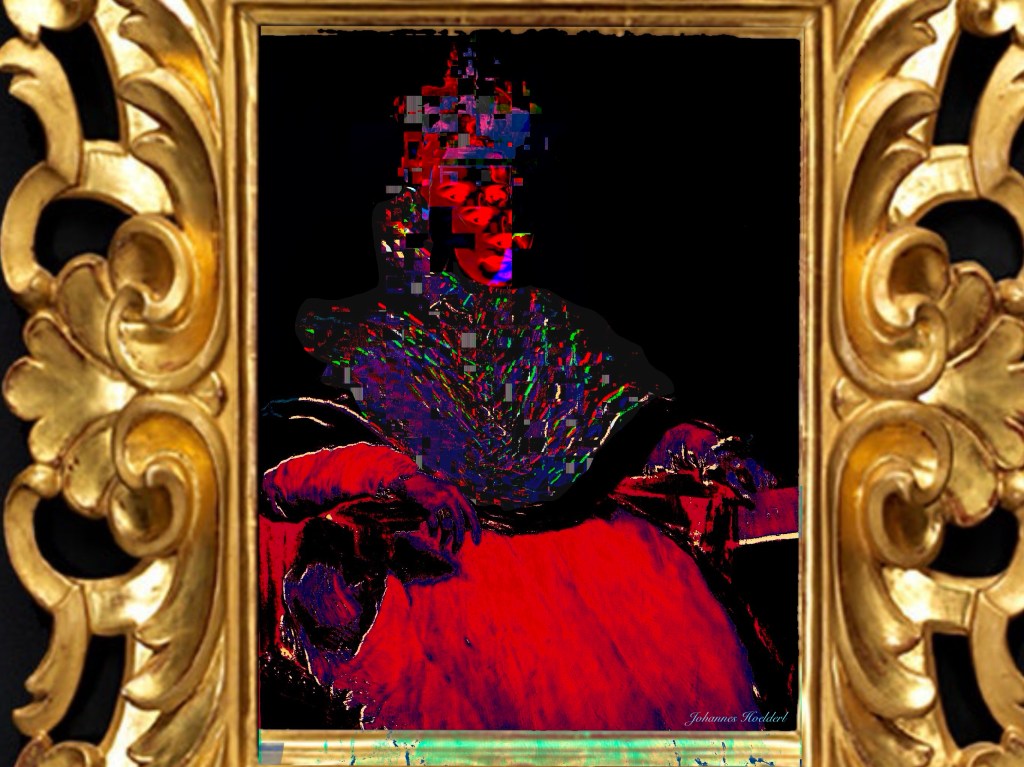
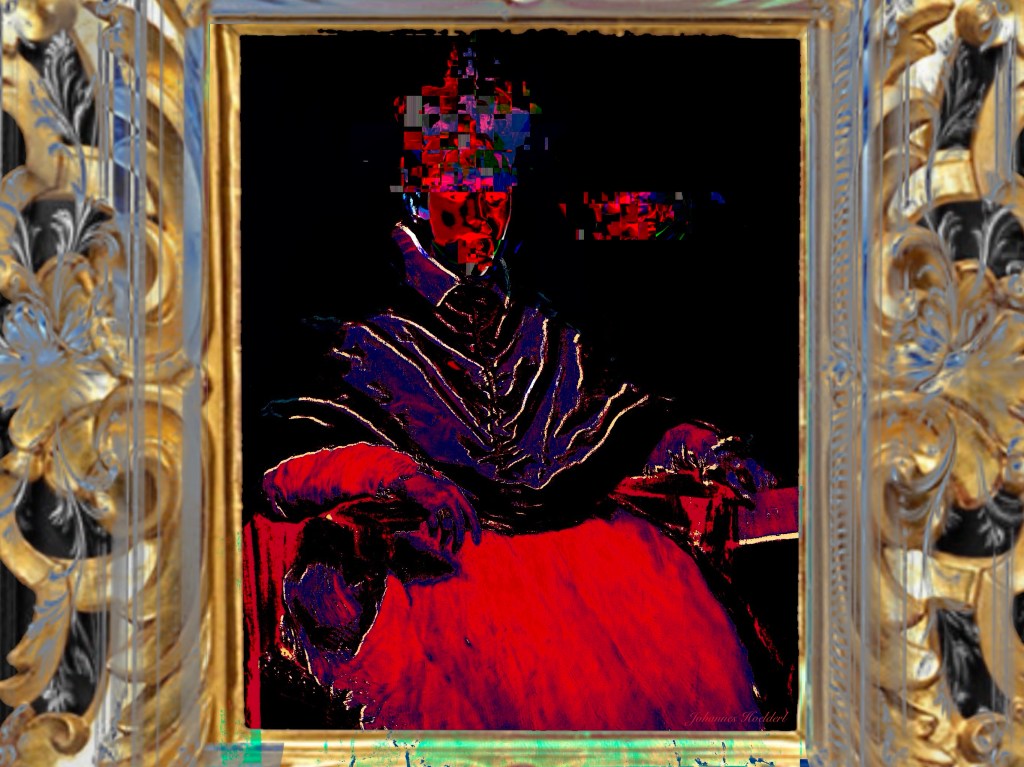
At the center sits a formally dressed figure in a composed, almost aristocratic pose. The subject appears seated, one arm resting across the body and the other draped over a surface covered in vivid red fabric. The clothing is dark—deep purples, blues, and blacks—rendered with sharp highlights that give the folds a sculptural quality. The red cloth dominates the lower half of the composition, glowing intensely against the surrounding darkness.
The face, however, is fragmented. The upper portion is broken into glitch-like blocks of red, blue, and magenta, as if the image is being digitally scrambled. This distortion disrupts the otherwise classical composition, creating tension between tradition and technological interference. The figure’s expression is partially obscured, making them feel distant, anonymous, or destabilized.
The background is nearly pure black, isolating the subject in a void-like space. This stark contrast intensifies the dramatic lighting and makes the colors—especially the saturated reds—feel almost electric.
Encasing the painting is an ornate gold frame with elaborate baroque-style scrollwork and floral detailing. The richness of the frame contrasts with the corrupted interior image, reinforcing the clash between old-world grandeur and contemporary digital decay.
Overall, the piece feels like a classical noble portrait overtaken by modern glitch aesthetics—suggesting themes of identity fragmentation, the instability of legacy, or the distortion of history through a technological lens.
  • This painting presents a dramatic fusion of classical portraiture and digital corruption.
At the center sits a formally dressed figure in a composed, almost aristocratic pose. The subject appears seated, one arm resting across the body and the other draped over a surface covered in vivid red fabric. The clothing is dark—deep purples, blues, and blacks—rendered with sharp highlights that give the folds a sculptural quality. The red cloth dominates the lower half of the composition, glowing intensely against the surrounding darkness.
The face, however, is fragmented. The upper portion is broken into glitch-like blocks of red, blue, and magenta, as if the image is being digitally scrambled. This distortion disrupts the otherwise classical composition, creating tension between tradition and technological interference. The figure’s expression is partially obscured, making them feel distant, anonymous, or destabilized.
The background is nearly pure black, isolating the subject in a void-like space. This stark contrast intensifies the dramatic lighting and makes the colors—especially the saturated reds—feel almost electric.
Encasing the painting is an ornate gold frame with elaborate baroque-style scrollwork and floral detailing. The richness of the frame contrasts with the corrupted interior image, reinforcing the clash between old-world grandeur and contemporary digital decay.
Overall, the piece feels like a classical noble portrait overtaken by modern glitch aesthetics—suggesting themes of identity fragmentation, the instability of legacy, or the distortion of history through a technological lens.
  • This painting presents a dramatic fusion of classical portraiture and digital corruption.
At the center sits a formally dressed figure in a composed, almost aristocratic pose. The subject appears seated, one arm resting across the body and the other draped over a surface covered in vivid red fabric. The clothing is dark—deep purples, blues, and blacks—rendered with sharp highlights that give the folds a sculptural quality. The red cloth dominates the lower half of the composition, glowing intensely against the surrounding darkness.
The face, however, is fragmented. The upper portion is broken into glitch-like blocks of red, blue, and magenta, as if the image is being digitally scrambled. This distortion disrupts the otherwise classical composition, creating tension between tradition and technological interference. The figure’s expression is partially obscured, making them feel distant, anonymous, or destabilized.
The background is nearly pure black, isolating the subject in a void-like space. This stark contrast intensifies the dramatic lighting and makes the colors—especially the saturated reds—feel almost electric.
Encasing the painting is an ornate gold frame with elaborate baroque-style scrollwork and floral detailing. The richness of the frame contrasts with the corrupted interior image, reinforcing the clash between old-world grandeur and contemporary digital decay.
Overall, the piece feels like a classical noble portrait overtaken by modern glitch aesthetics—suggesting themes of identity fragmentation, the instability of legacy, or the distortion of history through a technological lens.
  • This painting presents a dramatic fusion of classical portraiture and digital corruption.
At the center sits a formally dressed figure in a composed, almost aristocratic pose. The subject appears seated, one arm resting across the body and the other draped over a surface covered in vivid red fabric. The clothing is dark—deep purples, blues, and blacks—rendered with sharp highlights that give the folds a sculptural quality. The red cloth dominates the lower half of the composition, glowing intensely against the surrounding darkness.
The face, however, is fragmented. The upper portion is broken into glitch-like blocks of red, blue, and magenta, as if the image is being digitally scrambled. This distortion disrupts the otherwise classical composition, creating tension between tradition and technological interference. The figure’s expression is partially obscured, making them feel distant, anonymous, or destabilized.
The background is nearly pure black, isolating the subject in a void-like space. This stark contrast intensifies the dramatic lighting and makes the colors—especially the saturated reds—feel almost electric.
Encasing the painting is an ornate gold frame with elaborate baroque-style scrollwork and floral detailing. The richness of the frame contrasts with the corrupted interior image, reinforcing the clash between old-world grandeur and contemporary digital decay.
Overall, the piece feels like a classical noble portrait overtaken by modern glitch aesthetics—suggesting themes of identity fragmentation, the instability of legacy, or the distortion of history through a technological lens.

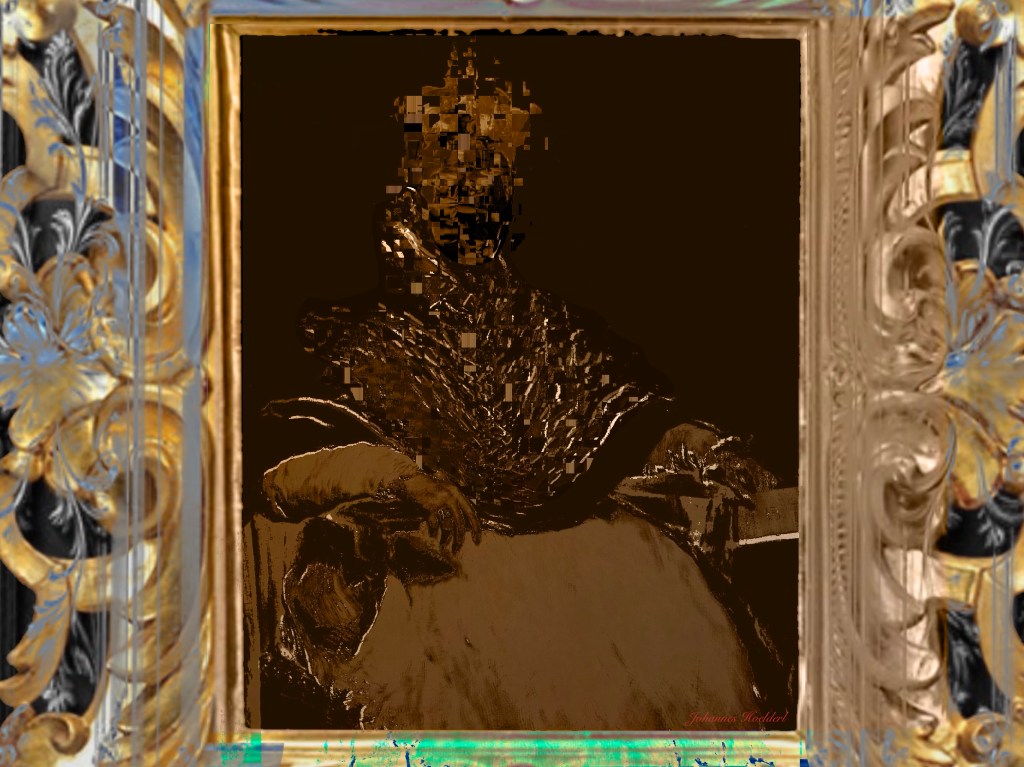
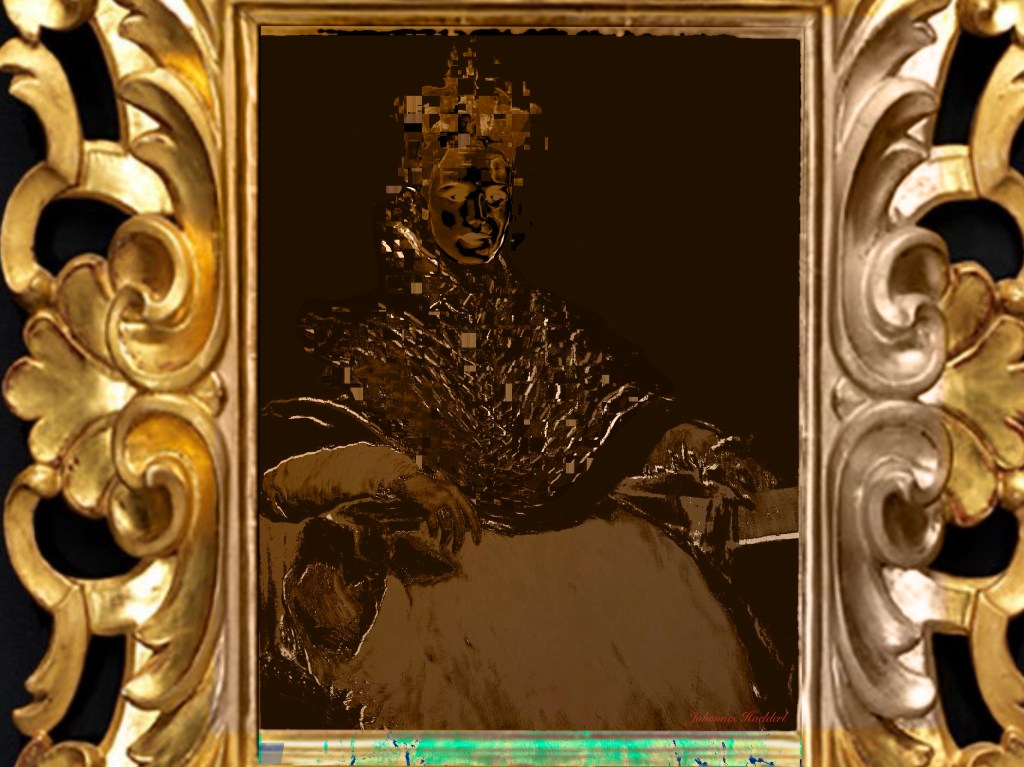
The painting Come back as Fire 3, presents a dramatic fusion of classical portraiture and modern art. At the center sits a formally dressed figure in a composed, almost aristocratic pose – with inspiration from: Spanish painter Diego Velázquez painting of Pope Innocent X. Distortion disrupts the otherwise classical composition, creating tension, somewhere between tradition and abstraction. The figure’s expression is partially obscured, making them feel distant, anonymous, or destabilized. The background is nearly pure black, isolating the subject in a void-like space. This stark contrast intensifies the dramatic lighting and makes the colors—especially the saturated reds—feel almost electric. The richness of the frame contrasts with the corrupted interior image, reinforcing the clash between old-world grandeur and contemporary art.

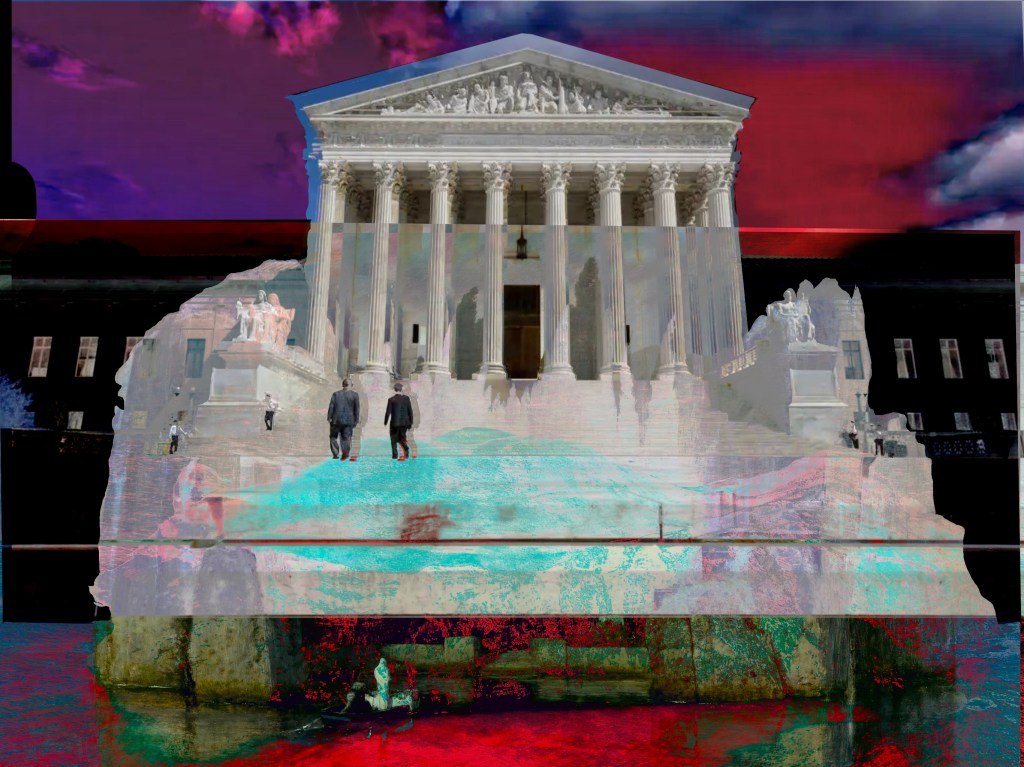
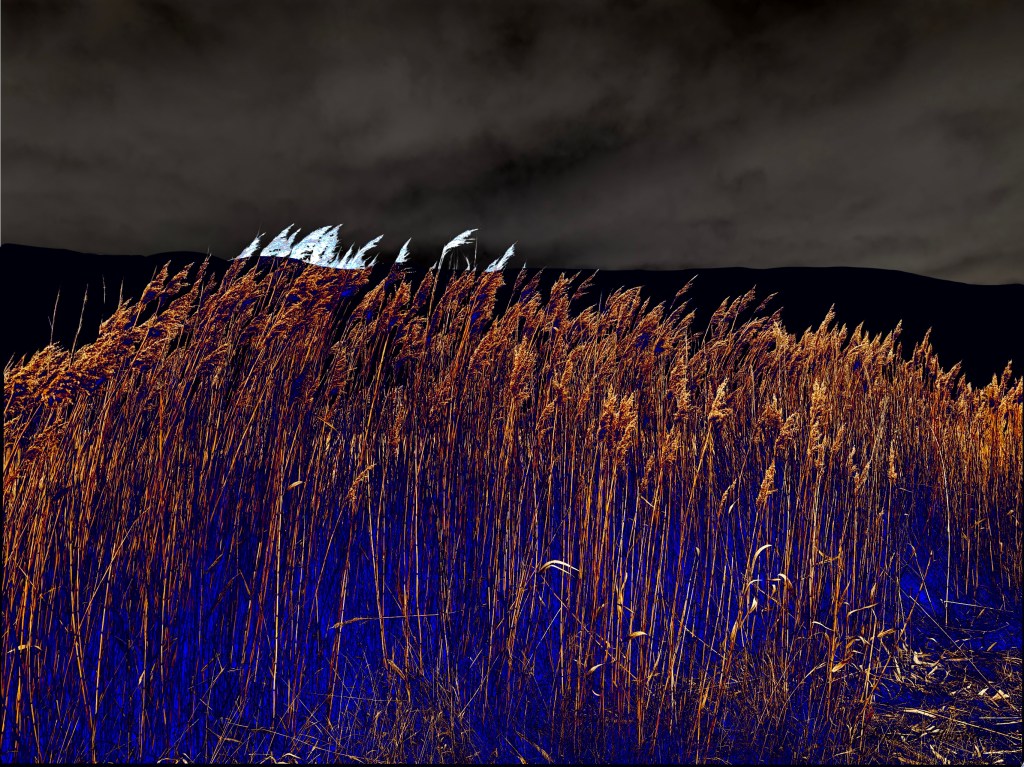
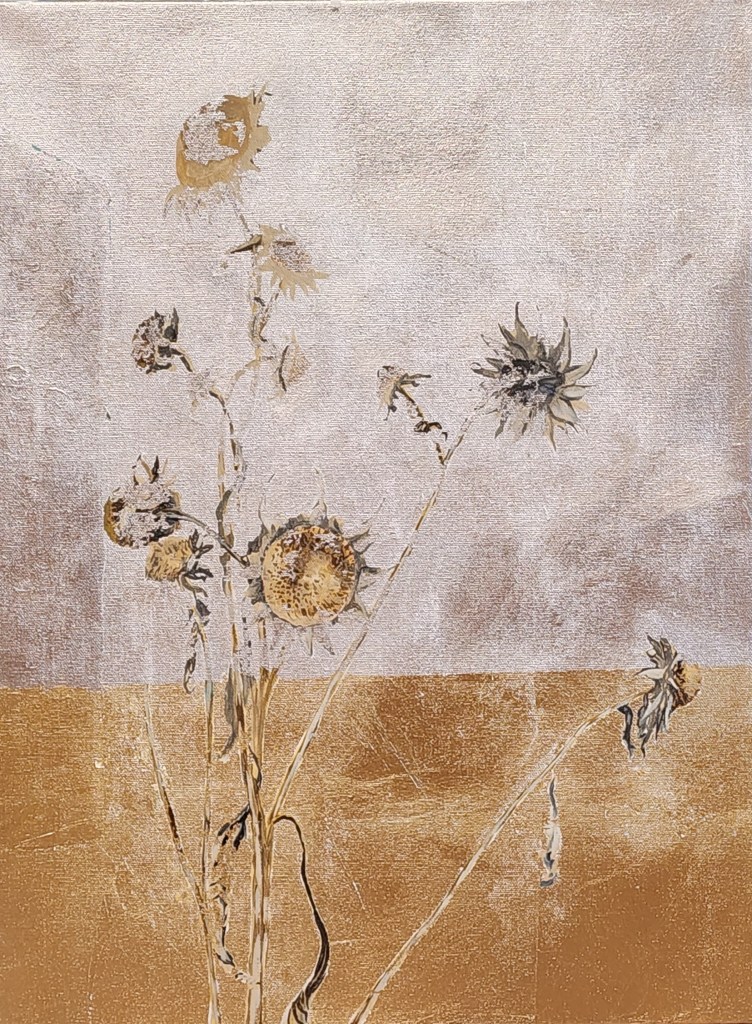
Wheat/ DigitalPainting/ 2732x2048px/2026
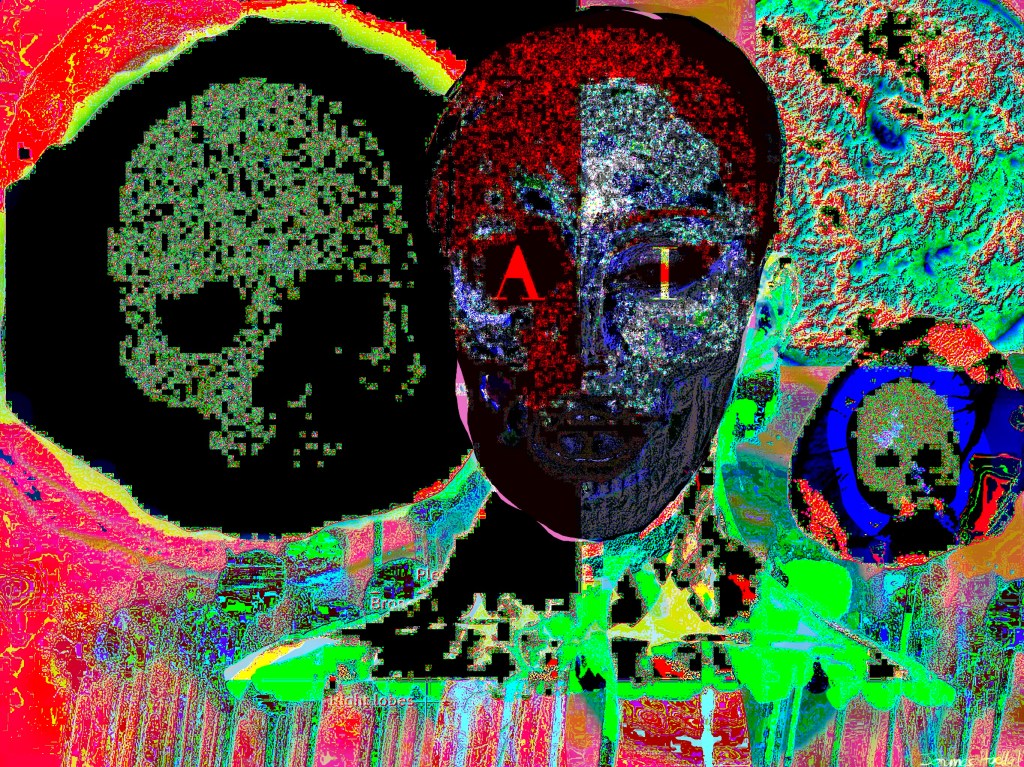
Lollipop/ DigitalPainting/ 2732x2048px/2026

This piece: Lollipop, is like a digital hallucination—an identity splintered across multiple realities.

At the center stands a human face, rigid and frontal like a ceremonial mask. It is divided sharply down the middle: one side saturated in violent red, the other textured in metallic blues and silvers. The split feels symbolic—two psyches coexisting, or perhaps battling. The red side pulses with urgency and aggression; the cooler half feels mechanical, almost fossilized, as though carved from circuitry.

The work seems to question identity in the digital age—how the self fractures under surveillance, data, media saturation, and mortality. It feels cyberpunk, apocalyptic, and theatrical all at once.

This is not a portrait of a person—it is a portrait of consciousness under pressure.